Retro Cowboy Cat Shirt SVG PNG
First Impressions: Whimsy with Wearable Weight
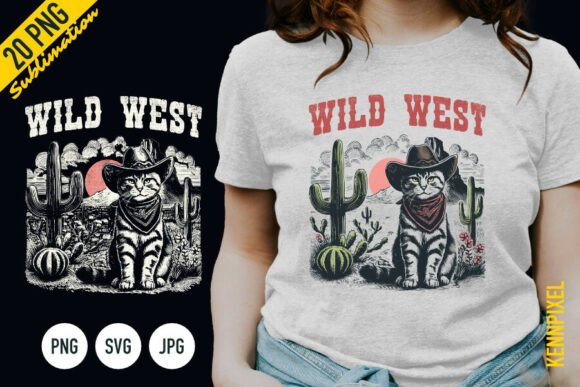
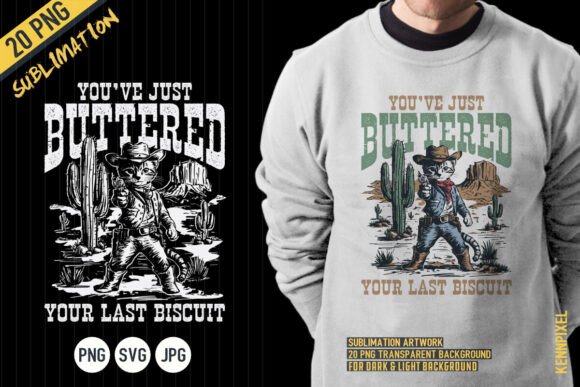
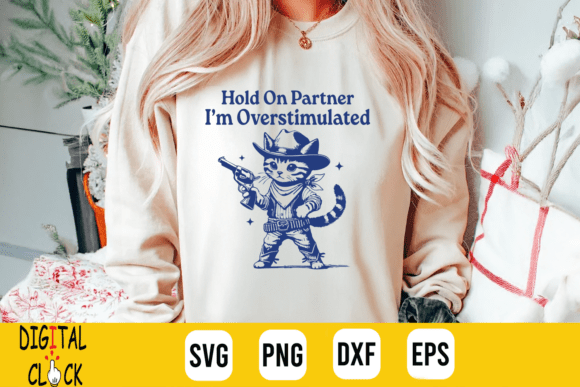
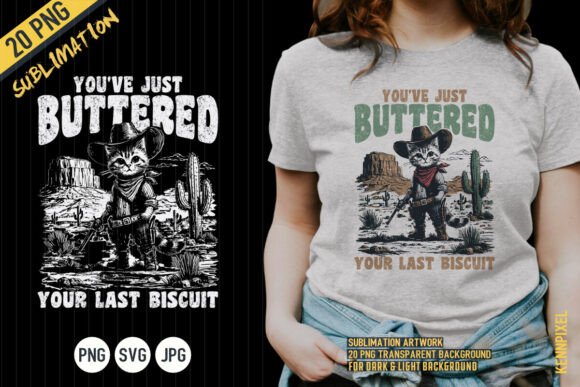
Opening the ZIP for Retro Cowboy Cat Shirt SVG PNG, I didn’t just see files—I saw a mood. That bold, slightly exaggerated cat silhouette in a weathered cowboy hat, boots, and bandana lands somewhere between nostalgic Saturday morning cartoons and a well-loved vintage t-shirt. It’s playful but not childish; retro but not dated. The vector-based SVG holds clean curves and intentional negative space—critical when translating to stitch. As an embroidery designer who’s stitched hundreds of cat motifs (from minimalist silhouettes to ultra-detailed portraits), this one feels *designed for translation*, not just screen display. It’s got rhythm: balanced weight across the hat brim, boot height, and tail curve. That matters—because uneven visual weight becomes uneven stitch density on fabric.
Real-World Test: Embroidering a Linen Tote for a Local Café Pop-Up
Last week, I prepped a custom linen tote bag for a neighborhood coffee roaster’s holiday pop-up. They wanted something warm, approachable, and subtly quirky—no corporate logos, just charm that felt handmade. I chose Retro Cowboy Cat Shirt SVG PNG as the centerpiece. Why? Because its strong outline and mid-level detail hold up beautifully at 4.5" wide on medium-weight linen. No pixelation in the JPG mockup. No jagged edges in the SVG when scaled down for a small hoop. And crucially—the 20 included PNGs gave me instant flexibility: I dropped one into a printable mockup for client approval, used another in a dark-fabric preview, and kept a third for my shop’s Etsy listing banner. That variety isn’t fluff—it’s workflow efficiency for craft businesses juggling client revisions, social previews, and production timelines.
Where This Design Shines (and Where It Asks for Care)
Retro Cowboy Cat Shirt SVG PNG performs best where personality meets practicality:
- Custom apparel: Works cleanly on crewneck tees, relaxed sweatshirts, and structured canvas jackets—especially with satin-stitch outlines and moderate fill-stitch areas.
- Embroidered patch: Its defined shape and limited interior detail make it ideal for iron-on or sew-on patches (just add border stitch in your embroidery software).
- Baby embroidery: Softened with pastel thread on organic cotton onesies—its friendly scale avoids overwhelming tiny garments.
- Holiday embroidery & personalized gifts: Stitched on tea towels or pillow covers for quirky hostess gifts; reads clearly even after multiple washes if stabilized properly.
- Small shop product: Fits boutique branding that leans into handmade authenticity—not mass-produced polish, but intentional charm.
But be mindful: the bandana’s fold lines and boot stitching are subtle. On textured fabrics like heavy terry cloth or loosely woven canvas, those details may blur. On stretchy knits or thin poly-blends, you’ll need cutaway stabilizer and reduced stitch density to prevent puckering. And while it scales well, avoid going smaller than 3" wide on curved surfaces like caps—the brim and tail lose definition quickly in tight hoops.
Stitching Clarity = Customer Trust
Here’s what seasoned Etsy sellers and craft fair vendors know: when a customer sees a crisp, confident stitch-out, they don’t just see a design—they see craftsmanship. Retro Cowboy Cat Shirt SVG PNG supports that impression because its shapes are purposefully simplified, not underdeveloped. There’s no overworked detail competing for attention—just clear focal points (the cat’s face, hat crown, boot toe) that read instantly, even from across a market aisle. That clarity builds trust. It tells buyers, “This wasn’t slapped together—it was chosen, tested, and finished with care.” That perception lifts perceived value, especially for handmade products priced above impulse-buy range.
Practical Designer Notes Before You Stitch
Before committing to your first run—or listing it as a digital embroidery file—do these five things:
- Test on scrap fabric matching your final product (e.g., brushed cotton for baby onesies, fleece for blankets).
- Check thread color contrast—especially for the bandana stripe and boot accents—on both light and dark backgrounds using your actual thread palette.
- Review stitch density in your embroidery software. If fill areas feel heavy for your fabric, reduce density by 10–15% before hooping.
- Confirm hoop size compatibility. While the vector scales freely, your machine’s max hoop capacity dictates usable dimensions—don’t assume “SVG = infinite scalability” in practice.
- Verify licensing for commercial use. Since the product description confirms 22 high-res files—including vector and print-ready formats—it’s built for craft business use, but always double-check terms before selling finished items or bundling as design assets.
Final Thought: A Design That Sells Itself—When Used Right
Retro Cowboy Cat Shirt SVG PNG isn’t a “one-size-fits-all” graphic. It’s a focused, stylistically coherent asset—one that earns its place in a thoughtful embroidery project, not just fills space. It fits naturally in categories like T-Shirt Designs and Graphics, but its real strength lies in how it elevates context: a cheerful apron for a bakery, a spirited pillow cover for a kid’s room, a standout tote for a small-batch maker. It doesn’t shout. It winks. And in handmade markets—where authenticity and intention matter more than volume—that quiet confidence is exactly what converts browsers into buyers.