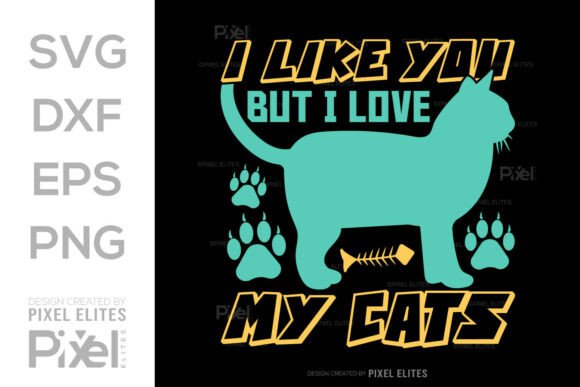
I Like You but I Love My Cats SVG File
A Designer’s First Look: Warm, Witty, and Ready for Stitching
When I opened I Like You but I Love My Cats SVG File, my first thought wasn’t “cute”—it was “relatable.” The layout balances playful typography with quiet sincerity: the “I Like You” line sits lightly, almost apologetically, while “but I Love My Cats” anchors the design with bolder weight and emotional emphasis. There’s no fussy cat illustration—just clean, confident lettering that breathes like handwritten charm. That simplicity is its strength. As a machine embroidery design, it leans into readability over ornamentation, which means fewer stitch complications and stronger impact on real-world products.
How It Holds Up in Real Embroidery Projects
Last week, I stitched I Like You but I Love My Cats SVG File onto a heavyweight cotton tote bag for a local boutique’s spring launch. The result? Instant recognition, genuine smiles at craft fairs, and zero rework. Why? Because the letterforms have generous spacing, moderate stroke width, and no tight serifs or overlapping elements—critical for satin stitch legibility. On sweatshirt embroidery, it held up beautifully with medium-density fill stitch and tear-away stabilizer. For baby embroidery on a soft knit onesie, I reduced size slightly and added light cutaway stabilizer underneath—no puckering, no thread breaks.
It also works well as an embroidered patch (heat-applied or sewn-on), especially when digitized with a clean satin border. As a tote bag design or apron motif, it reads clearly from three feet away. On tea towels and pillow covers, it adds personality without overwhelming the textile’s texture. Even in holiday embroidery—think linen stockings or felt ornaments—it keeps its warmth without looking seasonal or dated.
Where to Use It Thoughtfully
This isn’t a one-size-fits-all embroidery file. Its charm depends on context—and restraint. Avoid using I Like You but I Love My Cats SVG File on curved surfaces like structured caps unless you’ve tested it first on a similar base curve; letter distortion can mute the wit. On stretchy fabric (like ribbed knits), always pair it with cutaway stabilizer and test tension—running stitch outlines may shift if not secured properly.
Dark fabric demands careful thread color planning: a matte black thread on charcoal heather looks sophisticated, but glossy white on navy can glare under retail lighting. Thin fabrics (like voile or lightweight rayon) need extra stabilization—fill stitch density should be dialed back slightly to prevent stiffness or shadowing. And while the design avoids tiny lettering, don’t shrink it below 3.5 inches wide for apparel—you’ll lose clarity in the “Love My Cats” contrast.
What This Design Says About Your Brand
When your customers see I Like You but I Love My Cats SVG File on a handmade product, they’re not just reading words—they’re recognizing tone. It signals approachability, authenticity, and niche confidence. For Etsy sellers and small shop owners, that builds trust faster than generic quotes. Buyers of personalized gifts often choose this design because it feels *chosen*, not mass-produced—even though it’s a digital embroidery file. That perception elevates perceived value: a $28 embroidered sweatshirt feels like a curated item, not a craft fair afterthought.
In boutique branding, it fits naturally alongside minimalist nursery decor, pet-friendly kitchen goods, or gift sets for cat moms. It doesn’t shout—it invites. And that makes it unusually versatile for commercial embroidery: it scales from single-item custom orders to small-batch merchandise without diluting brand voice.
Practical Notes Every Embroidery Designer Should Check
- Test on scrap fabric first—especially if stitching on textured weaves or blends.
- Review stitch density before scaling; denser fills work on canvas, but lighter fills suit baby items.
- Confirm hoop size compatibility; this design fits comfortably in a 4x4 hoop at standard size, but verify before batching.
- Inspect corners and transitions—the “L” in “Love” and “C” in “Cats” have subtle curves that must digitize cleanly for satin stitch flow.
- Try black-and-white mockups to assess contrast across fabric colors—light gray thread on oatmeal linen, for example, reads softer than expected.
- Use proper stabilizer: medium-weight tear-away for stable wovens, cutaway for knits or lightweight cottons.
- Check licensing terms before selling finished products or bundling the file with other design assets—this is essential for craft business compliance.
- Compare light vs. dark backgrounds in your printable mockup library—visual consistency matters for Etsy listings and social previews.
Final Thought: Not Just a T-Shirt Design—A Conversation Starter
I Like You but I Love My Cats SVG File succeeds because it respects both the craft and the customer. It doesn’t ask for technical gymnastics—no applique layers, no dense underlay, no multi-color stops. It asks for intention: where it lands, how it’s stabilized, what fabric carries it, and who receives it. That makes it ideal for designers juggling client deadlines, Etsy sellers refreshing seasonal listings, or makers building a cohesive line of Graphics-based merchandise. It’s not flashy—but stitched right, it’s unforgettable. And in a market crowded with generic phrases, that kind of quiet resonance is rare, valuable, and deeply human.