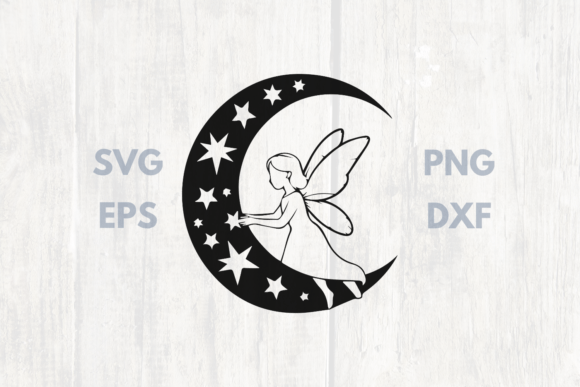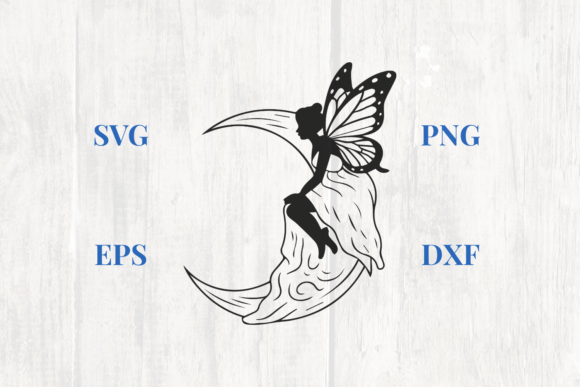
Butterfly Fairy with Moon
A Whimsical Design That Lands Gently—Not All Magic Stitches the Same Way
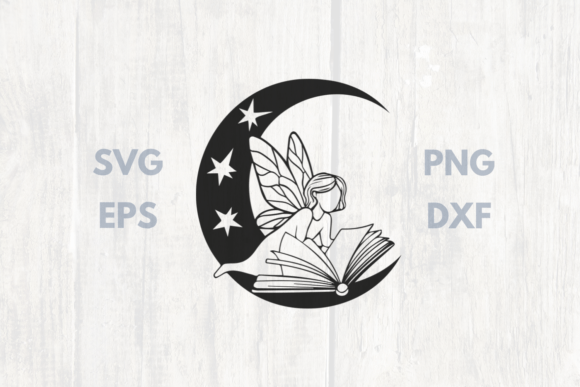
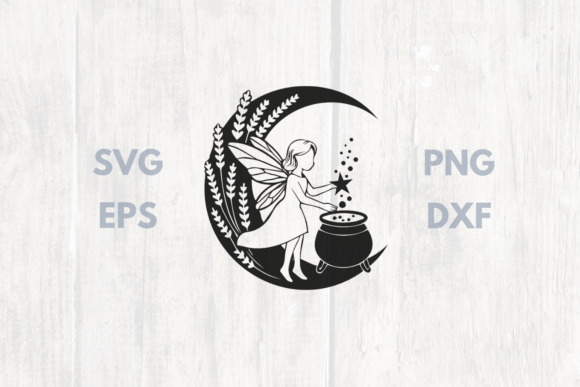
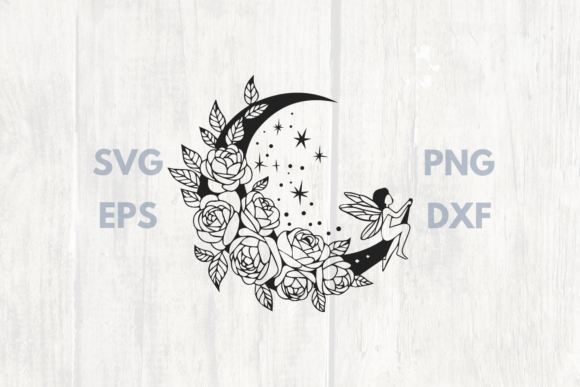
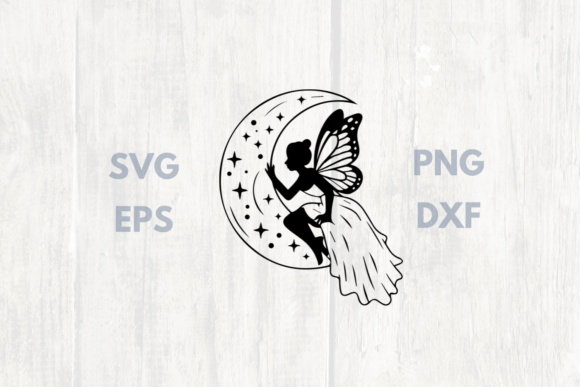
I pulled up Butterfly Fairy with Moon last week while prepping a custom order: a set of embroidered linen tea towels for a local boutique’s spring launch. The client wanted “soft magic”—not glitter-bomb fantasy, but something tender, grounded, and quietly memorable. Right away, Butterfly Fairy with Moon felt like a breath of cool air. It’s not a dense, high-detail illustration; it’s an intentional silhouette with lyrical curves, subtle negative space, and a gentle asymmetry that suggests movement—not perfection. The moon isn’t a perfect circle; it’s slightly tilted, softly crescented. The butterfly wings taper with quiet confidence. This isn’t just decoration—it’s storytelling in outline form.
Where It Shines: Real Projects, Real Reactions
In practice, Butterfly Fairy with Moon excels where delicacy matters more than drama. I stitched it on a lightweight cotton apron using a medium-density fill stitch and soft pastel threads—and customers paused mid-browse. Not because it shouted, but because it invited. That’s rare. It works beautifully on baby embroidery (think onesies or burp cloths), where tight stitching and heavy density can feel overwhelming. On a sweatshirt? Yes—but only if you choose a stable knit and pair it with light-to-medium stabilizer. On a tote bag design? Absolutely. Its open shape reads clearly even at 3.5 inches wide, and the clean lines hold up well after repeated washing.
As an embroidery file, it leans into simplicity without sacrificing personality. There’s no tiny lettering to vanish under thread, no nested satin-stitch petals that’ll pucker on thin fabric. That makes it reliable for Etsy sellers running small-batch custom apparel or craft fair vendors embroidering on-site. It also translates cleanly into printable mockups—no pixelation, no awkward scaling. Whether you’re building design assets for a seasonal collection or sourcing graphics for nursery decor, Butterfly Fairy with Moon holds its own as both an illustration and a functional machine embroidery design.
Where to Pause—Not Every Surface Is a Friend
That said, don’t assume it’s foolproof. On stretchy fabric like ribbed knits or curved surfaces like caps, the delicate wingtips and narrow moon curve need extra attention. I tested it on a baseball cap with standard tear-away stabilizer—and the left wing edge blurred slightly. Switching to a cut-away + topping combo fixed it. Also, avoid cramming it into hoops smaller than 4x4 inches unless you’re willing to simplify details manually. Tiny corners (like the tip of the fairy’s wand or the inner curve of the moon) can collapse in dense fill areas if stitch density isn’t adjusted.
Dark fabric is kinder to this design than you might expect—its open structure lets background color breathe through, adding depth. But test thread colors carefully: a stark white thread on navy can flatten the shape, while a heather gray or soft lavender keeps the whimsy intact. And if you’re planning an applique design, remember—the negative space between wings and moon is part of the charm. Don’t overfill it.
What It Does for Your Craft Business—Beyond the Stitch
Here’s what surprised me: how often customers asked about the story behind it. Not “Who made this?” but “What does she represent?” That tells me Butterfly Fairy with Moon carries emotional resonance—not just visual appeal. For handmade product sellers, that’s gold. It elevates a simple tea towel from kitchen utility to heirloom-adjacent. For wedding or baby shower gifts? It whispers care, not cliché. And for boutique branding? It adds quiet distinction—no loud logos needed.
It also builds trust. When a customer sees crisp, balanced stitching on a personalized gift, they don’t just see craftsmanship—they see intention. Butterfly Fairy with Moon supports that impression because it’s designed *for* embroidery, not just adapted to it. The curves flow with needle direction. The spacing avoids thread nesting. Even in a running stitch border version, it retains legibility.
Practical Notes from the Hoop
- Always test first—especially on textured fabrics like terry cloth or linen blends. What reads as airy on screen can feel muddy under thread.
- Check stitch density before sending to your machine. If the file includes multiple layers (e.g., outline + fill), confirm whether it’s optimized for single-pass stitching or needs manual layering.
- Review small details at actual size. Zoom in on wing veins or moon craters—if they’re too fine for your typical thread weight (e.g., 40wt), simplify or omit them.
- Mock it in black and white before finalizing thread choices. Contrast—not color—is what makes this design legible on finished products.
- Use proper stabilizer for your base fabric. Lightweight cut-away works for most woven goods; add a light water-soluble topping for sheers or napped fabrics.
- Confirm licensing before selling finished items or reselling the digital embroidery file. Since Butterfly Fairy with Moon is listed as an instant download for T-shirts and totes, double-check usage rights for commercial embroidery, patches, or digital product previews.
Final Thought: A Design That Serves the Maker—and the Moment
Butterfly Fairy with Moon won’t dominate a busy market table. It doesn’t need to. Its strength lies in how gracefully it integrates—into a child’s pillow cover, a holiday embroidery kit, a small shop’s limited-run apron line, or a heartfelt personalized gift. It’s the kind of graphics asset that feels curated, not crowded. As a designer who’s stitched hundreds of motifs across categories—from sweatshirt embroidery to baby embroidery—I appreciate when a file respects both the machine’s limits and the maker’s time. This one does.
If your craft business values clarity over clutter, tenderness over trend-chasing, and real-world performance over pretty thumbnails, Butterfly Fairy with Moon earns its place in your active design library. Just remember: magic stitches best when you stitch mindfully.